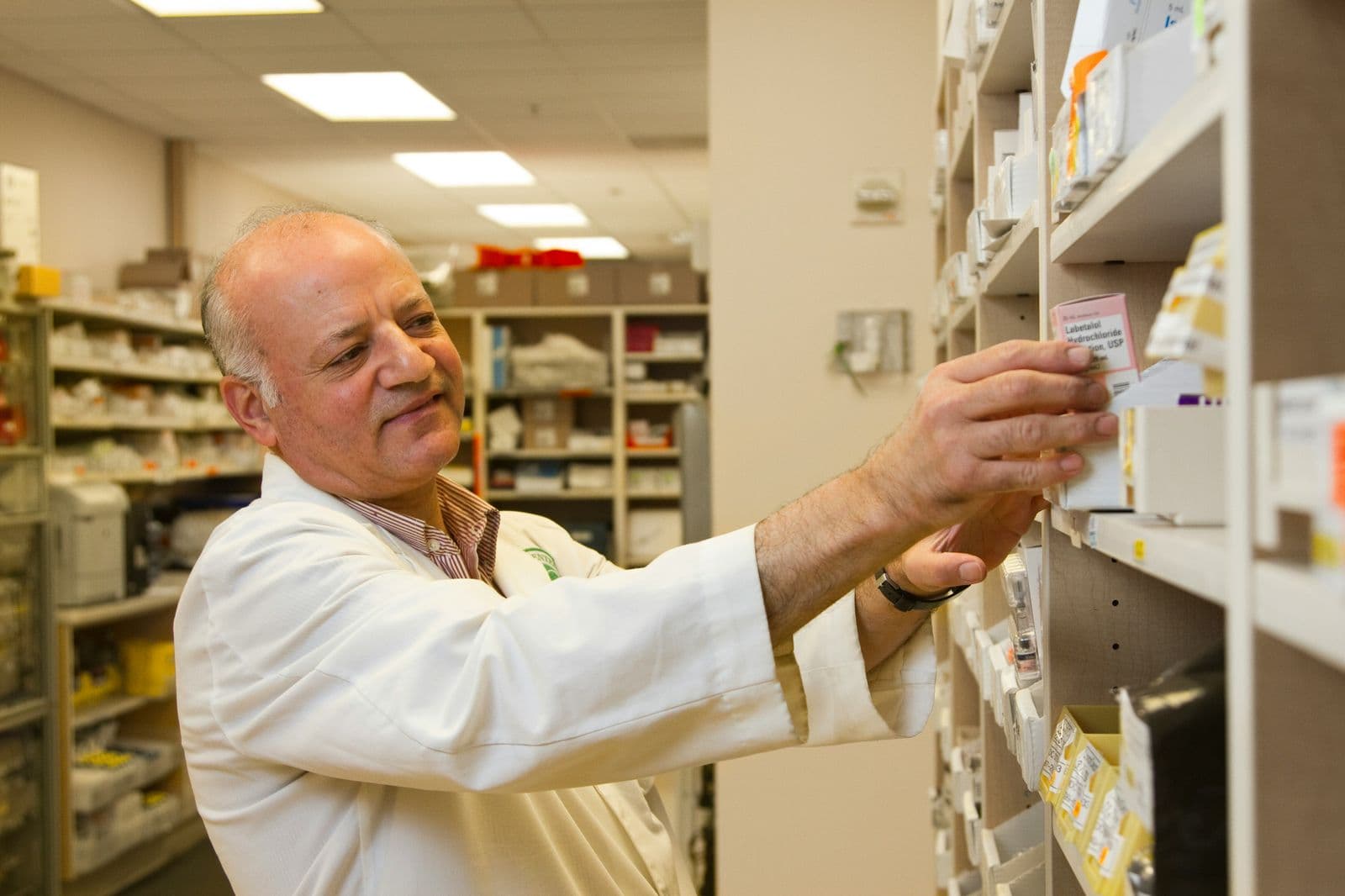
Here's something worth celebrating up front: pharmacy work is inherently measurable. You track adverse drug events, audit controlled substance inventories, manage MTM caseloads, and navigate a regulatory web that would make most professionals dizzy. That's a goldmine of resume material. And yet, most pharmacists bury it under generic bullets like "provided excellent patient care" and "managed daily operations" phrases that could describe a shift supervisor at any organization in any industry.
This is a fixable problem. You already have the achievements. You just need the language to surface them, for hiring managers who scan resumes in 30 seconds and for the ATS systems that score your resume before a recruiter ever opens the file. This guide shows you exactly how to make that translation.
97%
Of Fortune 500 Employers Use ATS
Missing terms like 'MTM' or 'Epic Willow' can lower your score before a recruiter ever reads your resume
10.6x
More Interview Callbacks
Candidates who include the exact job title from the posting on their resume are 10.6x more likely to land an interview, per Jobscan research
Top 3
Missed Resume Categories
Compliance expertise, financial impact, and patient safety metrics are consistently underrepresented on pharmacist resumes
The Operational Undersell Problem
Pharmacy Times identifies a clear pattern in pharmacist resume failures: generic statements that don't show real value. Phrases like "responsible for" or "worked with" don't tell employers how well the job was done or what impact was made. You know the full weight of what you carry every shift. The compliance audits, the patient counseling interventions, the formulary decisions. The resume just has to carry it too.

ATS Scores Resumes, and Pharmacy Terms Are the Keywords
The majority of healthcare organizations and pharmacy chains use Applicant Tracking Systems to parse and score resumes before a hiring manager sees them. A low ATS score pushes your resume down the candidate rankings. Recruiters who filter by score or only review top-ranked applications may never reach yours, regardless of your credentials. The fix isn't complicated: your resume needs the exact clinical, operational, and software terms that the job posting uses.
High-Value ATS Keywords Pharmacists Often Miss
- MTM (Medication Therapy Management)
- One of the most-searched pharmacy resume keywords. Don't just list it. Quantify the patient volume and outcomes it produced.
- Drug Utilization Review (DUR)
- A core clinical function that signals both safety competency and cost-management expertise to hiring systems.
- USP 797/800
- Sterile compounding standards from the U.S. Pharmacopeia. Listing these signals regulatory readiness in hospital and compounding settings.
- Epic Willow / Cerner / QS/1 / PioneerRx
- Pharmacy information systems. Naming the exact platforms you've used dramatically improves ATS parsing and matching.
- Antimicrobial Stewardship
- A high-priority program in hospital settings. Including it signals that you understand institutional patient-safety priorities.
Research across pharmacist job listings confirms that the most commonly required skills include Clinical Pharmacy, MTM, Pharmacy Automation, Patient Counseling, Patient Safety, and Clinical Pharmacology. The resumes that rise to the top of the candidate pool blend all three categories: clinical, operational, and regulatory, rather than leaning on clinical credentials alone. A tool like ResumeXray's Job Description Matching can show you exactly which terms from a posting are missing from your current resume, so you're not guessing.
The Three Categories You're Underselling
Regulatory and Compliance Expertise
Pharmacy regulatory compliance is genuinely complex. DEA, FDA, state boards of pharmacy, HIPAA, Joint Commission readiness: a single violation can mean fines, DEA registration suspension, license loss, or criminal penalties. That means a pharmacist who can demonstrate clean audit records and proactive compliance isn't just organized. They're protecting their employer from significant financial and reputational risk. HIPAA violations alone carry civil penalties of up to $1.5 million. If you've maintained a spotless compliance record, say so. Loudly.
Operational and Financial Impact
Formulary management, PBM/insurance claim resolution, inventory shrinkage reduction, prescription volume throughput: these are operational achievements with real dollar values attached. Most pharmacists gloss over them because they feel "administrative." Hiring managers don't see it that way. They see cost control, efficiency, and the ability to run a pharmacy that stays solvent and staffed.
Patient Safety Metrics
Medication error reduction rates, adverse drug event interventions, MTM patient outcomes, adherence score improvements: these are the patient-safety metrics that distinguish a pharmacist who shows up from one who moves the needle. If your MTM program reduced medication-related problems for a defined patient population, that story deserves a bullet, not a footnote.
From Task to Achievement: Real Before/After Examples
The transformation from task-based to achievement-based language isn't about inflating your work. It's about accurately representing the scope and impact of what you already do. Here's what that looks like in practice:
Controlled Substance Inventory
Managed inventory and kept shelves stocked
Managed controlled substance inventory with 100% successful quarterly DEA audits across 8 consecutive cycles, reducing inventory shrinkage by 10% ($50K annually)
MTM Program
Performed MTM reviews for high-risk patients
Performed MTM reviews for 60+ high-risk patients monthly, reducing adverse drug events by 30% and improving medication adherence scores by 20%
HIPAA Compliance
Maintained patient confidentiality
Evaluated 6,100 patient records in Athenahealth EMR to identify 21 compliance discrepancies, maintaining zero HIPAA violations across 7 years of practice
Your Certifications Are Worth More Than You Think
Board certifications like BCPS, BCACP, and BCOP signal specialized clinical expertise that many candidates lack. But certifications only pay off if they're properly featured. Don't tuck them at the bottom of your resume under a generic "Credentials" heading. Put them in your summary line, where ATS systems parse them early and hiring managers notice them fast.
Where Certifications Should Live
In Your Summary (Do This)
"Board-Certified Pharmacotherapy Specialist (BCPS) with 8 years of clinical pharmacy experience in hospital and ambulatory care settings..." The credential appears in the first two lines, scoring immediately with both ATS and human readers.
Buried at the Bottom (Don't Do This)
"BCPS" listed alone under a certifications section at the bottom of the page, with no context about when it was earned, what specialty it represents, or how it's been applied in practice.

Tailor by Setting: This One Matters More Than You Think
Applying with a retail-oriented resume to a clinical MTM role can lower your ATS score before a hiring manager reads a single line. Hospital and retail pharmacy require meaningfully different keyword profiles, and a resume written for one setting will underperform in the other. Consider a concrete example: a resume built around "prescription volume throughput" and "PBM claim resolution" is missing the antimicrobial stewardship and formulary management terms a hospital ATS is actively scanning for. The mismatch shows up in your score before a recruiter ever opens the file.
Hospital vs. Retail: What Each Setting Prioritizes
Do This
Avoid This
Hospital: MTM, antibiotic stewardship, interdisciplinary rounding, USP 797/800, Epic Willow, clinical pharmacology, formulary management
Using a retail-heavy resume for a hospital clinical role: the ATS score will reflect the keyword mismatch even if your skills don't
Retail/Community: Prescription volume throughput, immunization administration, PBM/insurance claim resolution, patient counseling, QS/1 or PioneerRx proficiency
Using a hospital-focused resume for a community pharmacy role: operational and customer-facing keywords will be missing from the match
Do This
Hospital: MTM, antibiotic stewardship, interdisciplinary rounding, USP 797/800, Epic Willow, clinical pharmacology, formulary management
Avoid This
Using a retail-heavy resume for a hospital clinical role: the ATS score will reflect the keyword mismatch even if your skills don't
Do This
Retail/Community: Prescription volume throughput, immunization administration, PBM/insurance claim resolution, patient counseling, QS/1 or PioneerRx proficiency
Avoid This
Using a hospital-focused resume for a community pharmacy role: operational and customer-facing keywords will be missing from the match
The Job Market Is Competitive, But It Favors the Prepared
The pharmacist job market remains active, with the BLS projecting approximately 14,200 pharmacist job openings annually through 2033. At the same time, factors like expanded clinical roles, increased automation, and shifting workforce dynamics mean more pharmacists are actively searching for new positions. Competition is real, but so is opportunity, especially for candidates whose resumes clearly communicate clinical, operational, and regulatory value.
AI and automation are also reshaping what employers want to see. Proficiency in pharmacy information systems like Epic, Cerner, QS/1, and PioneerRx is no longer optional in many postings. It's a baseline expectation. If you've worked with these platforms, name them explicitly. ATS systems match on specific software names, and a resume that says "pharmacy management software" instead of "Epic Willow" leaves match points on the table.
Your Pharmacist Resume Optimization Checklist
Before You Submit, Confirm You've Done This
Frequently Asked Questions
Do ATS systems automatically reject pharmacist resumes missing certain keywords?
Not exactly, and this distinction matters. ATS software scores and parses resumes rather than auto-rejecting them. A resume missing terms like 'MTM' or 'Epic Willow' will receive a lower score, pushing it down the candidate rankings. Recruiters who filter by score or only review top-ranked candidates may never reach a low-scoring resume, which produces a similar effect to rejection, but the mechanism is visibility, not elimination.
Should I include HIPAA compliance on my pharmacist resume if it's just part of the job?
Absolutely. Healthcare employers weigh risk management heavily, and a pharmacist who can document zero HIPAA violations over multiple years, or who participated in compliance audits, is demonstrating that they protect their employer from civil penalties that can reach $1.5 million. 'Part of the job' and 'valuable differentiator on your resume' are not mutually exclusive. Include it, quantify it.
How do I list MTM on my resume without it looking like a bare keyword?
Add volume and outcomes. Instead of 'Performed MTM reviews,' write 'Performed MTM reviews for 60+ high-risk patients monthly, reducing adverse drug events by 30% and improving medication adherence scores by 20%.' The keyword is still there for ATS scoring, but now it tells a story that a hiring manager will actually remember.
Do I need a different resume for hospital vs. retail pharmacy?
Yes, and the difference is more than cosmetic. Hospital pharmacy roles prioritize MTM, antibiotic stewardship, formulary management, and interdisciplinary collaboration. Retail roles prioritize prescription volume, immunizations, and PBM/insurance processing. Applying with a mismatched resume produces a lower ATS score even if your underlying experience is strong. Tailor the skills section and bullet language to match the setting you're targeting.